
Bond Repair vs. Deep Conditioning: What Does Damaged Hair Actually Need?
If your hair feels damaged, the answer is not automatically “use a better conditioner.” Dryness and structural weakness are different problems, and they often need different treatments.
At Tribeca ColorSalons, we think this distinction matters because soft hair is not necessarily healthy hair, and damaged hair is not always simply dry.
The right treatment starts with figuring out what is actually happening to your hair.
What Is the Difference Between Bond Repair and Deep Conditioning?
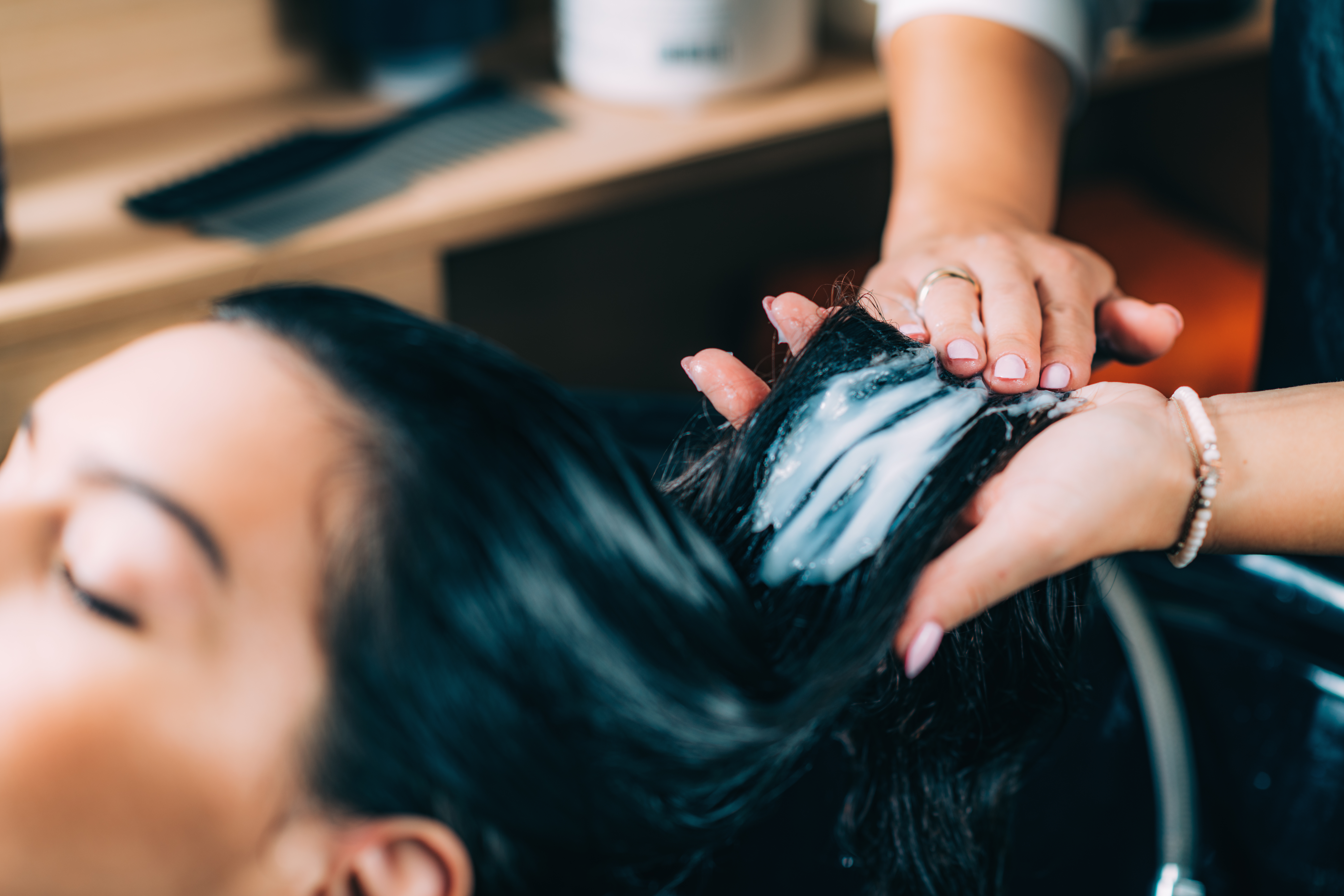
Deep conditioning primarily helps restore moisture, softness, flexibility, and manageability.
Bond-supporting treatments are designed to reinforce weakened internal hair structure caused by chemical processing, heat, and mechanical stress.
A simple way to think about it:
| If Your Hair Feels… | It May Need… |
|---|---|
| Dry, rough or dull | Moisture/deep conditioning |
| Weak, stretchy or breaking | Structural/bond support |
| Dry and fragile | Both |
| Heavy, coated or dull | Clarifying or chelating first |
The important word is may.
A professional assessment is helpful because several hair problems can feel surprisingly similar.
What Does Deep Conditioning Actually Do?
Deep conditioning improves moisture and manageability.
It can be particularly useful when hair feels:
- Dry
- Rough
- Frizzy
- Dull
- Difficult to detangle
- Less flexible than usual
Conditioning treatments typically smooth the cuticle and help hair retain moisture.
The result can be immediately noticeable. Hair may feel softer, shinier, and easier to style.
But that does not mean every kind of damage has been addressed.
What Is Bond Damage?
Hair is made largely of keratin proteins held together by different chemical bonds.
Bleaching, repeated chemical processing, excessive heat, UV exposure, and mechanical stress can weaken the hair’s internal structure.
Common signs include:
- Increased breakage
- Hair that stretches unusually when wet
- Ends snapping easily
- Loss of strength after repeated blonding
- Hair that feels weak even after conditioning
A bond-supporting treatment is intended to improve structural integrity rather than simply coat the outside of the hair.
Can Damaged Hair Actually Be Repaired?
This is where we want to be precise.
Hair is not living tissue, so damaged hair cannot biologically heal itself the way skin can.
Professional treatments can, however, improve strength, moisture balance, manageability, appearance, and resistance to future breakage.
Sometimes the most responsible recommendation is also a haircut.
If hair is severely compromised, no treatment can make a destroyed strand permanently “new” again.
That is why prevention matters so much.
How Do I Know Whether My Hair Needs Moisture or Bond Support?
Ask yourself what changed.
If your hair became rough after:
- Florida sun exposure
- Frequent swimming
- Dry air
- Too much shampooing
…moisture may be the main issue.
If the problem appeared after:
- Bleaching
- Repeated highlights
- Chemical services
- Frequent high-heat styling
…structural damage may be contributing.
And many clients need both.
A professional stylist can assess elasticity, porosity, breakage, texture, and service history before recommending treatment.
What About Protein Treatments?
Protein is another category entirely.
Protein treatments can temporarily reinforce weak areas in the hair, but more is not always better.
Too much protein can make some hair feel stiff and brittle.
This is another reason we do not recommend randomly stacking treatments just because TikTok says your hair “needs protein.”
Your hair needs the treatment that solves your actual problem.
Can Hard Water Make Damaged Hair Feel Worse?
Yes.
Tampa’s mineral-rich water can leave deposits on the hair that make it feel:
- Rough
- Heavy
- Dull
- Difficult to condition
In that case, applying more conditioner right away may not solve the underlying issue.
A professional clarifying or chelating treatment may need to remove buildup first.
Once that film is gone, conditioning products can often work much more effectively.
What Hair Treatments Does Tribeca Recommend for Blonde Hair?
Blonde and lightened hair often needs a combination of strategies.
At Tribeca, our damage-free blonding philosophy starts with avoiding unnecessary damage in the first place.
That includes:
- Careful consultation
- Realistic lightening goals
- Avoiding unnecessary bleach overlap
- Professional Davines color systems
- Customized salon treatments
- Appropriate home care
If the hair needs strengthening or moisture before additional blonding, we would rather address that first than chase brightness at the expense of hair health.
Why Is Professional Assessment Worth It?
Because “damaged” is not a diagnosis.
Two clients can both say:
“My hair feels terrible.”
One may have mineral buildup.
Another may have moisture loss.
Another may have significant bleach damage.
Another may simply need a haircut.
Treating all four people with the same deep-conditioning mask does not make sense.
At Tribeca ColorSalons, our stylists evaluate the hair in front of them before recommending a hair treatment in Tampa.
That is the same philosophy behind our ColorConstruct system. The solution starts with the individual, not the service menu.
How Can I Prevent Hair Damage Between Salon Visits?
You do not need a 12-step routine.
Start with the basics:
- Use professional products appropriate for your hair
- Apply heat protection before hot tools
- Lower excessive heat settings
- Avoid aggressive brushing when hair is wet
- Protect hair before swimming
- Rinse chlorine and saltwater promptly
- Schedule trims when ends begin splitting
- Do not overlap chemical services unnecessarily
Consistency matters much more than having a bathroom full of products.
Frequently Asked Questions
Is bond repair better than deep conditioning?
Neither is universally better. They address different hair needs.
Can I use both?
Yes. Some damaged hair benefits from both moisture support and structural strengthening.
How often should I deep condition my hair?
It depends on your hair type, condition, and product. Your stylist can recommend an appropriate schedule.
Does bleached hair always need bond treatment?
Not necessarily, but lightened hair should be monitored for changes in strength, elasticity, and moisture.
Why does my hair still feel dry after using conditioner?
Mineral buildup, structural damage, heat damage, or the wrong products can all contribute.
Should I cut damaged hair?
If the ends are severely split or compromised, trimming may be the healthiest option. Treatments can improve hair condition, but they cannot permanently rebuild severely destroyed ends.
Stop Guessing What Your Hair Needs
If your hair feels dry, weak, brittle, heavy, or simply different than it used to, do not assume the answer is another product.
Find out what is causing the problem first.
Tribeca ColorSalons offers professional Tampa hair treatments customized around the actual condition of your hair, whether it needs moisture, strengthening, mineral removal, scalp care, or simply a good trim.
Book a consultation and let our Tampa hair stylists help you build a healthier hair plan based on what your hair actually needs.