
What Is Hair Porosity and Why Does It Matter for Hair Color?
Hair porosity describes how easily your hair absorbs and holds moisture, color, and other products. It matters because two people can get the same professional color service and still get very different results if their hair has different levels of porosity.
At Tribeca ColorSalons, we believe hair condition should help determine the color plan. That is one reason porosity is part of our ColorConstruct process before we create a customized formula.
If you have ever wondered why your ends grab color darker, your blonde fades quickly, or certain sections of your hair always feel drier, porosity may be part of the answer.
What Does Hair Porosity Actually Mean?
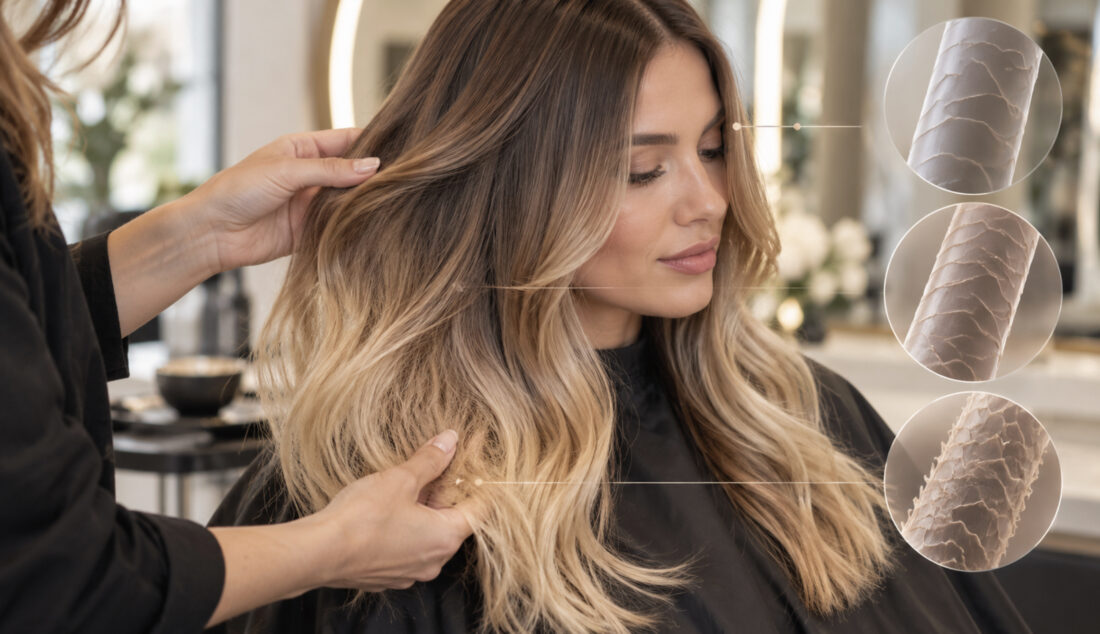
The outer layer of each hair strand is called the cuticle.
You can think of it like overlapping shingles on a roof. When those cuticles are relatively smooth and compact, hair tends to absorb products more slowly. When they are raised or compromised, moisture and color can enter quickly but may also escape quickly.
Hair is generally described as having:
- Low porosity
- Medium or normal porosity
- High porosity
Porosity can also vary on the same head of hair.
For example, your newer growth may be relatively healthy while previously lightened ends are much more porous.
That distinction matters when your stylist is creating a color formula.
How Does Low-Porosity Hair Behave?
Low-porosity hair tends to have a tighter, smoother cuticle.
You may notice that:
- Water sits on the hair before absorbing
- Products can feel like they sit on top of the hair
- Hair takes longer to become fully saturated
- Heavy products create buildup easily
Low porosity does not mean unhealthy hair. It simply means your stylist may need to adjust product choice, processing and application based on how your hair accepts color.
What Does High-Porosity Hair Look and Feel Like?
High-porosity hair absorbs moisture very quickly but can have difficulty retaining it.
Common signs include:
- Hair dries unusually quickly
- Ends feel rough or brittle
- Hair tangles easily
- Color fades faster in certain areas
- Hair absorbs toner or color unevenly
- Previously bleached areas behave differently from natural hair
Chemical processing, repeated heat styling, environmental exposure and normal wear can all affect the condition of the cuticle.
Why Does Porosity Matter When Coloring Hair?
This is where things get especially important.
More porous sections of hair can sometimes absorb color faster or differently than healthier areas. That means a stylist should not necessarily treat your roots, mid-lengths and ends exactly the same.
Porosity can affect:
- How quickly hair lightens
- How toner deposits
- How dark a color appears
- How evenly color processes
- How long color remains vibrant
- How much conditioning support the hair needs
This is one reason professional hair color is more complex than selecting a shade from a chart.
Your stylist is coloring the hair that is actually in front of them.
Why Can My Ends Look Different From My Roots?
Your roots are newer hair.
Your ends may have experienced years of:
- Hair color
- Blonding
- Heat styling
- Sun exposure
- Pool water
- Tampa humidity
- Hard water
- Mechanical wear
That history can make the ends significantly more porous than the roots.
Applying one formula from scalp to ends without accounting for those differences can lead to uneven results.
At Tribeca, ColorConstruct helps our Tampa hair stylists assess hair condition and history before building the formula.
Does Porous Hair Mean I Cannot Go Blonde?
Not necessarily.
But it can change the plan.
If the hair is very porous, fragile or already compromised, your stylist may recommend:
- A more gradual blonding plan
- Conditioning treatments first
- Less aggressive lightening
- Avoiding previously lightened areas
- Strategic highlights instead of all-over lightening
- More time between chemical services
Our philosophy is simple: healthy blonde hair is better than lighter hair that breaks.
Can You Fix Hair Porosity?
You cannot permanently turn chemically compromised hair back into completely untouched hair, but professional treatments and good home care can dramatically improve how it feels, behaves, and retains moisture.
Depending on the hair, we may recommend:
- Deep conditioning
- Bond-supporting treatments
- Davines professional hair care
- Regular trims
- Reduced heat styling
- Color-safe home products
The goal is not to chase a label like “perfect porosity.”
The goal is healthy, manageable hair.
Why Is Porosity Part of a Good Hair Color Consultation?
A professional color consultation should look beyond the inspiration photo.
Your stylist should understand:
- Where your hair has been colored
- Which areas have been lightened
- Where breakage exists
- How the hair feels
- How much maintenance you want
- What your hair can safely achieve
That is exactly why Tribeca’s proprietary ColorConstruct process evaluates individual hair before mixing a formula.
The service name might be “balayage.”
The formula should still be yours.
Frequently Asked Questions
How do I know what hair porosity I have?
Your stylist can evaluate your hair’s condition during a consultation. At-home porosity tests are not always reliable because product buildup and previous chemical services can affect the result.
Does high-porosity hair lose color faster?
It can. A compromised cuticle may have more difficulty retaining artificial pigment, which can contribute to faster fading.
Is bleached hair always high porosity?
Not necessarily, but repeated lightening can increase porosity, especially if hair has been overprocessed.
Can different parts of my hair have different porosity?
Absolutely. Your natural roots may behave very differently from previously colored or lightened ends.
Does Tampa’s climate affect porous hair?
Florida sun, swimming, humidity, and hard water can add stress to already compromised hair, making professional maintenance and appropriate home care especially important.
Should I tell my stylist about old hair color?
Always. Even color applied many months ago may still exist in your lengths and ends and influence how your hair responds today.
Let Your Hair Determine the Formula
Great hair color starts with understanding the hair, not simply choosing a shade.
At Tribeca ColorSalons, our Tampa hair stylists use consultation, professional education and ColorConstruct to create color plans based on the condition, history and goals of each guest.
If you are considering blonding, balayage, dimensional color or a major change, schedule a consultation and let us evaluate what your hair actually needs before we mix a single formula.