
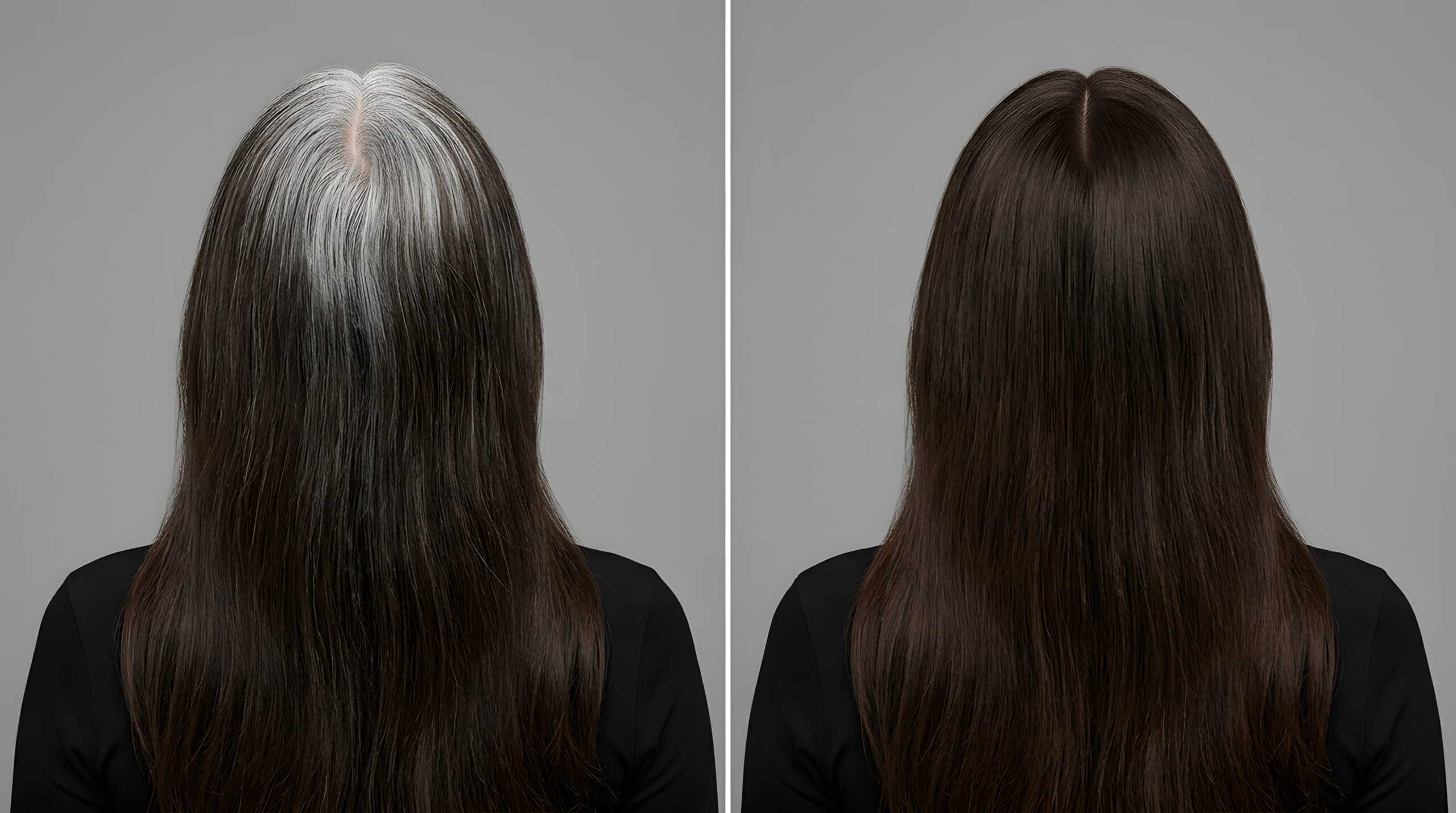
Gray Blending vs. Gray Coverage: Which Is Right for You?
Gray blending and gray coverage solve two very different problems. Gray coverage is designed to conceal most or all visible gray, while gray blending works with your natural silver to soften contrast and create a more dimensional, lower-maintenance result.
The better option is not determined by your age or even by how much gray you have. It comes down to something much more practical: how you want your hair to look as it grows and how often you realistically want to visit the salon.
That distinction matters.
At Tribeca ColorSalons, we would rather help you choose a gray strategy that fits your actual life than put you on a maintenance schedule you will eventually resent.
Why Is Gray Blending Becoming So Popular?
For years, the standard reaction to gray hair was simple: cover it.
That is changing.
Clients are increasingly asking how to incorporate their natural gray instead of completely hiding it. Vogue Business reported that searches for “gray blending” grew 73% year over year, reflecting a broader shift toward dimensional, lower-maintenance hair color.
The appeal is not necessarily about “going gray.”
It is about having options.
Modern gray blending can make silver strands look deliberate by using strategic color, highlights, lowlights, glosses, or tonal adjustments to reduce the contrast between your natural hair and your gray.
The result can still look polished and professionally colored. It simply grows out differently.
What Is the Difference Between Gray Blending and Gray Coverage?
Here is the easiest way to think about it:
| If You Want… | Consider… |
|---|---|
| Little to no visible gray | Full gray coverage |
| Softer regrowth | Gray blending |
| More dimension | Gray blending |
| Consistent solid color | Full coverage |
| Longer stretches between obvious root touch-ups | Gray blending |
| To gradually incorporate natural silver | Gray blending |
| Complete control over your chosen shade | Full coverage |
Tribeca has offered both gray coverage and gray blending for years, with gray blending specifically designed to work with the variation already present in naturally graying hair.
Neither option is automatically better.
The right question is: Which result and maintenance schedule make sense for you?
Who Is a Good Candidate for Gray Blending?
Gray blending can be especially appealing if:
- You are tired of seeing a strong root line a few weeks after coloring.
- You want to keep some of your natural silver.
- You prefer dimensional color rather than one uniform shade.
- You want your grow-out to feel softer.
- You are considering transitioning toward more natural gray over time.
- You want fewer dramatic differences between appointments.
It can work on blondes, brunettes, and darker hair, but the technique has to be customized.
Someone with scattered silver around the temples needs a very different approach from someone whose hair is predominantly gray.
That is where consultation matters.
When Does Full Gray Coverage Make More Sense?
Full coverage is still an excellent option.
You may prefer it if:
- You do not want visible gray.
- You love a specific brunette, red, or other solid shade.
- You are comfortable maintaining your roots regularly.
- You want a more uniform finished color.
- Your natural gray pattern creates contrast you simply do not enjoy.
There is nothing inherently more sophisticated about blending your gray than covering it.
That is an important point.
Hair color should not become another rule about what you are “supposed” to do as you age. Some clients love their silver. Some want none of it. Others fall somewhere in between.
All three choices are valid.
Can Highlights Be Used to Blend Gray Hair?
Yes, and this is where gray blending gets interesting.
Strategically placed highlights and lowlights can help connect your natural pigmented hair with your silver strands so the contrast feels intentional rather than abrupt.
For some guests, that may mean very fine highlights.
For others, the answer may involve:
- Lowlights
- Demi-permanent color
- Glossing
- Face-framing brightness
- Dimensional color placement
- A combination of several techniques
This is why “gray blending” is not one universal service or formula.
It is a color strategy.
Is Gray Blending Really Lower Maintenance?
It can be, but “low maintenance” is relative.
If full permanent coverage gives you a visible root line within several weeks, blending may allow that new growth to transition more softly into the rest of your color.
That can mean less urgency around your next appointment.
But gray blending still requires professional maintenance to keep the tone and dimension looking intentional.
The goal is not necessarily “never color your hair again.”
The goal is a maintenance schedule that makes more sense for you.
What If You Have Been Covering Your Gray for Years?
You can still transition to blending, but it may take time.
If years of permanent color are sitting on the mid-lengths and ends, your stylist has to work with both your natural new growth and the artificial pigment already present.
Trying to erase all of that history in one aggressive appointment can compromise the hair.
At Tribeca, this is exactly where our ColorConstruct approach becomes important. Before creating a formula, we evaluate your existing color, hair condition, natural pigment, desired result, and maintenance goals.
Sometimes the healthiest transition happens over several appointments.
That is not a failure to get the result quickly.
It is a plan designed to get you there with better hair.
How Does Tribeca Decide Which Gray Strategy to Use?
We do not start with “coverage” or “blending.”
We start with you.
Our Tampa hair color consultations look at:
- How much natural gray you currently have
- Where your gray is concentrated
- Your previous color history
- Your natural base color
- Hair condition and porosity
- The result you actually want
- How often you want to return
- How much visible gray you are comfortable keeping
From there, we build the appropriate color plan.
Tribeca specializes in professional color application, including gray coverage, balayage, blonding, and other customized color services.
Gray Blending vs. Coverage: Our Point of View
Here is the part we think matters most:
Do not choose your gray strategy based solely on what looks best the day you leave the salon.
Choose it based on what you are willing to maintain six weeks later.
That is often the difference between loving your color long term and feeling trapped by it.
The best gray color is not necessarily the color that hides the most gray. It is the color that looks intentional today, grows out gracefully, and fits your real life.
Frequently Asked Questions
Is gray blending the same as highlights?
Not exactly. Highlights can be one technique used within a gray-blending plan, but gray blending may also involve lowlights, glosses, demi-permanent color, or other customized techniques.
Does gray blending completely cover gray hair?
Usually no. The goal is generally to soften and integrate gray rather than eliminate every silver strand.
Is gray blending better for your hair than permanent coverage?
It can reduce the need for repeated full coverage in some cases, but the healthiest approach depends on your hair condition and color history.
Can brunettes get gray blending?
Absolutely. Gray blending is not just for blondes. Placement and tone simply need to be customized so the silver integrates naturally with darker hair.
Can men get gray blending or gray camouflage?
Yes. Gray camouflage can soften visible gray without creating an obviously colored or overly uniform result.
How often should I maintain gray blending?
There is no universal schedule. Your percentage of gray, technique, tone, and desired finish all affect maintenance. Your stylist can create a schedule around how much regrowth you are comfortable seeing.
Find the Right Gray Hair Color Strategy in Tampa
You do not have to choose between “cover every gray” and “stop coloring completely.”
There is a wide middle ground.
At Tribeca ColorSalons, our Tampa hair color specialists can help you decide whether gray coverage, gray blending, camouflage, highlights, or a combination approach makes the most sense for your hair and lifestyle.
The goal is not to hide your age.
It is to create hair you genuinely like living with.
Schedule a consultation with Tribeca ColorSalons to create a gray color plan designed around you.